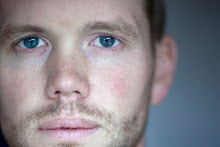
Giselle Vegter is a theatre maker who makes performances about topical issues. During Festival a/d Werf she will show RUMOR, a play that will take place in a busy square, behind the central train station of Utrecht. Several performers will be portraying characters and interacting with each other in the middle of the square. They will be watched by a group of spectators from the lounge of a theatre, located in the second floor of a building that looks over the square. This piece premiered last year in Linz, Austria.
In this play you have two different sets of spectators, can you tell me a bit more about how that works?
There is the real audience, who are somehow treated like voyeurs. They are hidden, standing in a place above in a building, so you can't see them from the street. And there are also people looking at this from the street. And the ideal situation would be that they don't know that there is theatre going on, that it doesn't draw too much attention. Although sometimes it will because there are some conflicts among the characters and because it is impossible to play something in the street that is fully natural. Every time an actor starts a dialogue in the streets there is somehow another tension. But that is also what is interesting about it. It is also good if people can realize that there is something different going on. Probably they won't really know what it is and most of them will just walk on. And these people passing by are also being looked at, of course. They are unintentionally walking into a theatre play.
How did people react to this in Austria? Did people believe into the reality of the play?
Partly, with some roles yes but less with others. For example, everybody thought that the homeless man was real but this happened less with the youngsters. You could see that they were acting and that what they were doing was not really true. So that is why I will try to make it more subtle this time, more natural although it will still be theatrical.
How did you develop the idea for this play?
Well, I like to look at people on the street and I think everybody does. I started imagining how it would be if we could all know what is going on inside the heads of the strangers around us, or what their stories are. If you go to the central train station, there are so many individual longings and stories and if you look at the faces you see already a lot, but sometimes I like to fantasize more about them. And then I started thinking what would happen if you could turn these individual longings into a theatre piece and put it in the middle of reality and then allow people to look at this for a while. And I think that I'm also questioning the way theatre is positioning itself against real life. Often when I see a theatre piece, I think it has nothing to do with real life. So I think we should make theatre -or, at least, I would like to make theatre- that has a closer connection with the reality that we are living in. I am looking for ways to translate this, to find and tell stories that have a strong connection with our world.
What role should theatre play in society?
It should have a critical role. We should reflect and go further, bringing in new thoughts about the world that we're living in and about ourselves. What I like about theatre, and about art in general, that it is somehow outside of the system and we have great freedom there. And I would like to use this freedom in a conscious way.
Would you say that your work is political?
If you think of political work as a way of making things clear or raising awareness then I would say yes although I would rather call it societal. Once, for example, I made a performance for children about transience (vergankelijkheid). And it is not a political story but it is about how we deal with people who suffer from memory problems, and that makes it relevant to our society.
Your piece seems to also tackle issues about surveillance and exposure, and about a distinction between the private and the public that is becoming increasingly blurry.
Absolutely. We are being watched and exposed continuously, and we are also becoming uneasy about this. We are becoming increasingly afraid of being exposed. I think we are being disturbed by this and we don't always know how to deal with it. An example of this is mobile phones, that people are using to speak their private lives out in public. And they are featured extensively in the performance.
Wednesday, May 19, 2010

INTERVIEW WITH FANNI FUTTERKNECHT
Fanni Futterknecht works as a performer and visual artist in Vienna, Paris and Amsterdam. She studied visual art at the Gerrit Rietveld Academy in Amsterdam and at the Academy of Applied Arts in Vienna, followed by a Masters study at the Piet Zwart Institute in Rotterdam. Her previous focus of interest was video installations, but she currently develops performances that are constructed for traditional theatre contexts. In 2006 she joined the program Essai at the Centre National de Danse Contemporaine in Angers, a program aimed at young artists from different disciplines, that fosters the exploration of new dance and performance strategies. In Spring 2008 she received a grant for a three months residency in Rome where she pursued her choreographic and her visual work. After her stay in Rome she lived for half a year as artist in residence at La Cite International des Arts in Paris where she developed her last solo performance Excerpts of confusion. This performance had its premiere at Imagetanz Festival 09 in brut Vienna. At the moment she is working on a new performance: Where life has no value, paradise sometimes has its price which was presented at WUK Vienna and will be shown at Festival a/d Werf.
In which way does your work as a visual arts influence your work?
I wouldn't consider myself a visual artist but rather simply somebody who is creating work inspired by a visual art context. My background as a visual artist is still very present, I think in a very 'image-based' way. When I make performances I think a lot about the images I want to create. Not only the images that I want to produce as such, that you can actually see, but also the ones I want to evoke in the spectator. I feel concerned about the physicality of the image, of how to represent them within a performative situation. There is also the aspect of time that became very relevant for my work now. Before, I was working with video, which is a different way of using time.
So this aspect is something I am really curious about, how do we read a performance in relation to a film. For example, the difference between time in video and time in a live event, in a performance, where you cannot hide anything. How could you create a performance with a time feeling that is rather related to film? I try to create the equivalent of zooms, or close ups in a performance. I always start with an idea of an image and then I try to develop a certain physicality or action that would allow me to approach this image.
Speaking of aesthetics, I have the impression that you are working with very aesthetic, compared with your previous work.
Yes it might look different, but the strategy of aesthetic is maybe the same. Now this piece deals with artificiality and superficiality. It is a plastic paradise, with naïve shapes and cartoon figures. It is full of strong colours put together in an obvious relation. One of the performance works that I did before was inspired by a more “painterly” way of creating an image, like a baroque painting.
It was composed in a way that could remind you of such a style. But this new piece is about artificiality and the texture of artificiality; it is also about naiveté, and so there is a need to work with simple shapes and simple obvious actions.
Can you tell me a bit more about your projects for the future?
I don't perceive my work as projects. For me it is one big research that comes out through different works or objects but in the end I actually feel I am always busy with the same thing. But I can say that I would like to make another solo work which goes further into this aspect of naiveté and innocence and therefore would also like to collaborate with children for certain scenes.
Can you name this search?
That would actually be a contradictory thing to do. I am in fact working exactly against this idea of naming things or framing them or putting them down or being concrete about things. But of course, in a way, I still do it a lot. But I do it in order to leave these frames or definitions or even theories behind. I do not want to base my work on theory, even though theory inspires me a lot. And I also don't want to speak about the concrete or well-defined. My work is rather about the open, the 'un-concrete', the undefined. I have a very big drive to go into things that we but also the dreams that we dream when we are awake. What is this 'un-physical' mental or even spiritual cannot grasp or that are not really reachable. I am curious to find out about different realities. For instance, the reality of dreams. Not only the dreams we have at night that happen in the unconscious, reality and how does it seduce us? This has to do with my very personal relation to life.
Tuesday, May 4, 2010
Interview with João Evangelista
“It is all about being stupid so that the audience can be intelligent”João Evangelista (Portugal/The Netherlands) majored in Artificial Intelligence and Logic Systems Theory, before completing the School for New Dance Development in Amsterdam (where he studied choreography, performance art and directing). He makes live performances, theatre, dance and everything that falls in between. When seen his work, the public is never static, but is always invited to participate in one way or another. For Festival a/d Werf 2010, he will present We hope you (or why there are no butterflies in winter). He started working on this piece last year, as an artist in residence at Huis a/d Werf, after his last work ‘The End Must Go On (or how to survive midnight without becoming a pumpkin in 10 easy steps)’, a 6 hours durational performance presented at Pact-Zollverein, Essen (DE).
At which stage of your creative process are you at the moment?
When the residency was taking place, we were finding the work by doing it. Now the work is done, the 'machine' is ready. What I am currently doing is dismembering the machine into parts, and I'm looking at how the different parts make the motive behind of the work emerge.
Through this performance, I want people to experience the three basic mechanisms of hope, which are derived from the philosophy of Ernst Bloch: awareness of the not yet, of what is to come; daydreaming, which is imagining beyond what is already there; and a perception shift where both things come together. So I am focusing to understand which part of the performance, of the 'machine', can better trigger each of these mechanisms and how it actually does that.
How do you test these things?
For the moment, it is just me, the philosopher Elisabeth Boender, and the and the artist I invited for the collaborative process Yen Yi-Tzu, looking at documentation of the work, mapping it and understanding it from the outside. Later on, I'll rehearse it and have open showings to see how it actually works.
'Hope' appears to me to be something very subjective, how can you trigger it as a collective experience in the audience?
I just want people to experience the three basic mechanisms that hope requires. Instead of aiming at big words or the big concepts, such as Hope, I aim at deconstructing it into smaller mechanisms as I told you about. If the audience, through these three mechanisms, can experience hope, that would be great. But I couldn't do the whole work for the audience. I can trigger things, but that's about it. How they take it is up to them.
You mentioned Bloch before. The work which you are doing is partially inspired in a philosophical investigation, but I understand that you don't want to make it an obscure and intellectual piece. How do you aim to achieve this?
By making it very naive. My own philosophical reflections should stay in the studio, or presented as an end publication, something very usual in the field of fine arts, but not theater. There is a simplification of the complexities. I want to understand what kind of language operates in which way. When we look for banal and absurd locations, places that can trigger day dreaming, for example. It is all about being stupid so that the audience can be intelligent. We research all these theories but we replace them with things that are very simple, almost on the edge of being silly and naïve, that belong to the everyday life, but reflect the seriousness of the subject I approach.
Monday, May 3, 2010
Guillaume Marie talks about his work Nancy
“The more you see it's fake, the more you believe into it, and the more disturbing it gets”Guillaume Marie is a young French Choreographer who was born in Caen in 1980 and currently lives in Paris. He has worked with people such as Jan Fabre and the object theatre director Gisèle Vienne. He created his first performance Cracking your smile in 2005. From then on he has created work together with Jonathan Capdevielle and Maria Stamenkovic-Herranz and directed short movies. For Festival a/d Werf 2010 he will show a very particular interpretation of the death (and life) of Nancy Spungen, the wife and former groupie of Sid Vicious from Sex Pistols.
How did you become so interested in Nancy's death?
I started working two years ago with Maria Stamenkovic-Herranz, an artist from Spain who is now based in New York. The first event that we worked on was about the death of Joan Vollmer, William Burrough's wife. I was fascinated by that very famous event and by the way in which people were connected to it through their own imaginations. Through their own subjectivity, they rebuilt or reconstructed it. So, from this point onwards I decided to make a cycle of pieces with this idea in mind. The first one was Trigger, about Vollmer, the second one is Nancy and the third one is going to be called AsfixiA and it is going to be created in 2011.
With the first piece, we didn't have any images or any police report about the death so most of the material came from Burrough's books and other writers from the Beat Generation. Also it wasn't clear if her death was an accident or a murder. With Nancy I was interested in an event that happened a bit later in time, with the same amount of mysteries around it, so that we could have some more images and documents available. And the third one should be about an overmediatised event. But all of them are about how our own fantasies and our own subjectivity connects us to those events, and furthermore to what surrend us. What is important for me is to start from this reality point and to discover possible metaphors and symbols within it, so that the result becomes a visual piece, not a narrative work. I am not interested in telling Nancy's story. We dis-articulated the story completely so that we could rebuild it as a nightmarish journey. And in my opinion, this way we can get closer to the truth of what actually happened than if we were using details and anecdotes.
How would you like people to experience this?
At the point where we are now, what we created is very ambiguous and ritualistic. And I like that very much. The performer Suet Wan Tsang is representing Nancy's journey, and is also performing with Rebecca Flores, a make up artist . I was very interested in how this metaphoric journey can be interrupted by a more real action which is the application of makeup and special effects. So we are being hypnotized by what is happening to the performer, and then this is broken by a kind of making of, as if you were present at the shooting of a movie. And, at the same time, with Rebecca's work you always question what you are seeing. Sometimes it looks very fake and sometimes it looks very real. I don't think it is a very comfortable piece to watch to be honest, it is very challenging, because I ask a lot of things from the audience. I think it provokes a lot of questions about what you are watching and how to process it.
So you were not looking for a sort of alienation or Verfremdungseffekt with the appearances of the makeup artist?
This is funny because that it is how I thought it would be. But now that the piece is almost finished I am seeing the opposite, it actually creates a lot of tension. It is very interesting to see how the elements are articulating with each other. I am still trying to understand what is going on there. It's weird because the more you see it is fake, the more you believe into it, and the more disturbing it gets. It is very hypnotic to watch. A friend came to see it and said something interesting. She said the piece starts with death and then moves on to life, but somehow life seems even more fucked up than death. So all these distortions can be quite confusing as an audience member.
Tell me more about your process. How did you work so that you could accommodate this unexpected effects into the piece?
First of all I did a lot of research and presented it to the others. It is very important for me that people digest all this information because my work is about how you transform things with your own subjectivity, how you make it your own. We also prepared several things in advance with Rebecca, the makeup artist, and ended up having a collection of effects we could use. We did a lot of pre-production work, so once we arrived in the studio a lot of elements were already there: the stage design, the visual imagery for the projections, the music and the makeup. We then started to play with the elements and quite soon we began 'writing' the piece, in a way which was very similar to writing a movie script. We knew that Suet-Wan would go through certain states and pictorial moments but we spent a lot of time developing the transitions between those moments and the layers that could actually turn her into a character. We worked hard on building the psychology behind the character.
I find the mention of psychology interesting. Often people who don't want to deliver a story in a traditional way also shy away from any psychological aspect.
Well, I'm quite busy with Lacan at the moment, and this is what I understand by 'psychological'. I am trying to bring the three main elements of Lacanian psychology into the piece which are the real, the other and the symbolic. Because those three elements are articulated with each other and present though different forms or materials in the structure, I can say that psychology is all over the piece.
When you talk about this project, you also refer to the way in which faith has shifted in western societies from the religious sphere to that of fandom within pop culture.
When I started to work on Nancy, I suddenly found a connection between her and Santa Teresa de Ávila. And from this point we started to look at all the similarities and differences. Nancy was a groupie, searching for some kind of fame or adoration while believing in the punk utopia, and that state of belief is very close to a religious belief which creates an opposition that I find very interresting to explore. So from this point on, you can start using religious words to describe a rock 'n' roll story.
Friday, April 16, 2010
A rehearsal with James Beckett
Last week I had the opportunity to sneak into a couple of rehearsals of Zakłady na Życie (Plant-Life), the performance that James Beckett is preparing for the Festival a/d Werf 2010. In this work in progress, he is looking for something subtle that escapes clear-cut definitions. Neither fully a performance but also not a work of visual art. Probably the realm where this work could be more accurately placed is that of music. Throughout the rehearsal, James often refers to the performers as musicians. This does not mean that they actually play music, at least not by standard accounts of what music is. But they understand movements and words in a way which is akin to that of musicians. Their craft is not that of emotions and storytelling, and not even that of actions and sounds. Their work is inserted in the universe of silences and notes, of rhythms, repetition and sequences that engage with the time and space of the performance with the elegance of a minimalist opera. It is not by accident that he often refers to the work of Robert Ashley, a major composer and creator or multidisciplinary projects, that extended the boundaries of musical exploration in radical ways. His work Automatic Writing (1979), for example, integrated words that were triggered by his mild Tourett's Syndrome. He justifies this exploration in a fascinating way: “I wondered, naturally, because the syndrome has to do with sound-making and because the manifestation of the syndrome seemed so much like a primitive form of composing-an urgency connected to the sound-making and the unavoidable feeling that I was trying to 'get something right'-whether the syndrome was connected in some way to my obvious tendencies as a composer.” (click here for the complete article)
The forms explored by Ashley -which often include only a restricted number of elements that are inserted into structures where repetition is very important- certainly provide some inspiration for James. On a different level, however, his usage of found objects is probably more closely related to world of contemporary visual arts or to the theatrical work of directors such as Tadeusz Kantor (as I have pointed out in a previous post.) From a collection of unusual relics found in abandoned Polish factories, he has devised a space that offers a glimpse into the life inside those factories. It is not a collection of stories or a historical explanation of what happened there, but rather an artistic interpretation, carefully crafted by the combination of concrete objects and rhythmic sequences of voices and movements, that are both compelling and mysterious.
The forms explored by Ashley -which often include only a restricted number of elements that are inserted into structures where repetition is very important- certainly provide some inspiration for James. On a different level, however, his usage of found objects is probably more closely related to world of contemporary visual arts or to the theatrical work of directors such as Tadeusz Kantor (as I have pointed out in a previous post.) From a collection of unusual relics found in abandoned Polish factories, he has devised a space that offers a glimpse into the life inside those factories. It is not a collection of stories or a historical explanation of what happened there, but rather an artistic interpretation, carefully crafted by the combination of concrete objects and rhythmic sequences of voices and movements, that are both compelling and mysterious.
Tuesday, April 6, 2010
A second rehearsal with Roos van Geffen.
Today I had the opportunity to see another rehearsal with Roos. Unlike last time, today she was working with all five performers at once (on the previous occasion she was working with only one of them). They were all simultaneously repeating a carefully choreographed set of motions, and yet they looked so different to one another. They would reproduce the same movement -for example, nodding at a particular speed and with a certain rhythm- with astonishing precision and attention to detail. And yet their movements would come across as being radically diverse from those of the other performers. A subtle expression which would strike me as contempt in one of the faces, would appear to be joyful detachment or plain resignation when carried out by the other performers.
The interesting thing is that these emotions are completely in the mind of the spectator (in this case, in my mind). The performers are actually forbidden to try to represent or act out any emotion. Rather, they give themselves completely to the task of following a very precise set of actions, rigorously woven together. When they accomplish this scheme with full concentration, then the audience members can engage with them in a playful and active usage of their imagination, bringing along their own set of associations. Roos describes her objective as “triggering deeper layers of memory” in the minds of the spectators. During the rehearsal I couldn't help thinking about the beautiful book by Yoshi Oida, An actor adrift. There, he often describes how some of the most striking performances he ever witnessed were always accomplished by actors whose mind was “empty”. Empty, at least, of emotions. He explains how, when a complete devotion to a physical task is accomplished by a performer on stage, a state of perfect blankness is achieved, a void which can be compared to a hollow container, which the spectators -in a way which is often unconscious- fill in with their own minds, with imagery from their personal memories.
Tuesday, March 23, 2010
A rehearsal with Roos van Geffen
A week ago I had the opportunity to talk to Roos van Geffen about her work in progress, Adem (breath). She has been rehearsing for a couple of weeks at the Huis a/d Werf and she just made a short video with one of the actresses she is working with, in order to keep track of her research process. In it, the actress nods while looking into the camera. Subtle changes make the movement appear completely different. At first, it is a perfectly neutral nod, without any hint of anything else. Then she nods with her head up high, her eyes slightly down, but still looking straight into the camera. Later on, she lowers her head completely, still nodding, with her chin almost touching her chest. Finally, her nodding becomes violent, plunging her head into a furious dance. But the frenzy suddenly gives way and all movement stops. I feel tempted to describe the feelings that this movements might induce in the spectators: 'when her head is lifted she looks at us with contempt, when her head is lowered, she looks gloomy', that kind of things. But that is not completely accurate. Describing the movements in such a way is not being true to what actually goes on in the film. And as Roos tells me, the video itself is a poor substitute for the live version of those actions. That is why I ask her if I can see one of her rehearsals, a privilege she happily grants me. So the next day I join her and her team. It is fascinating to see Roos at work with the actors. She looks at them with such intensity, pursuing with them the discovery of actions that can have an peculiar resonance. She engages in this research process with patience and curiosity, looking for something very unique. But what is it that she is looking for? When I ask her, she says that in her performances she is always trying to create a moment of silence, to prepare the members of the audience to enjoy a moment of untroubled calmness. A prime example of this is We, one of her former theater works. There, two spectators were lead to a moment where they could look at each other for three minutes. In most of her previous experiential projects, the spectators had very individual experiences. This time, her work Adem, will maintain all this intimacy, while moving into a more conventional theater stage. This work will premiere at the Festival a/d Werf 2010.
P.S. After seeing the rehearsal, I have to agree that the video cannot capture the whole complexity of what is happening on stage... so I will not embed the video it here. Anyways, I hope these words have triggered the imagination of the readers of this blog, and their curiosity to come to the festival and check out the work of Roos. I leave you, however, with a short interview with her.
P.S. After seeing the rehearsal, I have to agree that the video cannot capture the whole complexity of what is happening on stage... so I will not embed the video it here. Anyways, I hope these words have triggered the imagination of the readers of this blog, and their curiosity to come to the festival and check out the work of Roos. I leave you, however, with a short interview with her.
Subscribe to:
Posts (Atom)